
Latin America has long been one of the most important markets for crop protection products, supported by its large agricultural base and its role in global soybean, corn, sugarcane, coffee, fruit and other agricultural commodity supply chains.
But in 2026, one thing is becoming increasingly clear: Latin America should no longer be viewed as one single agrochemical market.
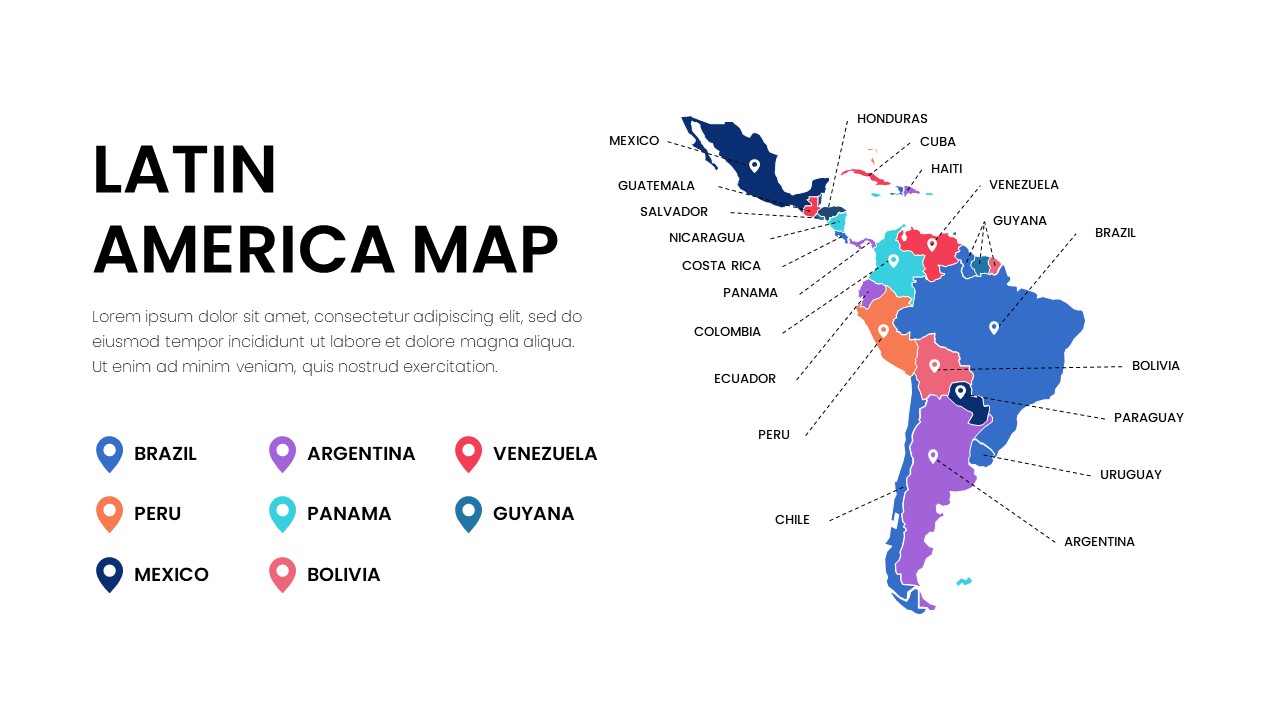
Brazil, Argentina, Mexico, Chile, Colombia, Peru and other countries are developing in different directions, with different crop structures, regulatory frameworks, purchasing patterns and supply-chain requirements.
For agrochemical manufacturers, distributors and suppliers looking at Latin America, understanding these differences may be just as important as understanding the products themselves.

Brazil remains the largest agricultural market in the region and a key destination for crop protection products. Soybean and corn cultivation continue to be major drivers of demand, while sugarcane and other crops add further complexity to the market.
For the 2025/26 season, Brazil's soybean area is expected to increase by around 3.4%, while corn area is projected to grow by approximately 4.1%. Meanwhile, crop protection markets in countries such as Chile, Colombia and Peru are also supported by demand from fruit and vegetable production.
However, market growth does not necessarily mean that buyers are simply purchasing more products.
In some segments, growers and distributors are becoming more cautious about inventory, prices and working capital. For example, Brazil's glyphosate imports fell 21.2% year-on-year during January–April 2026. At the same time, China accounted for approximately 82% of Brazil's glyphosate imports during this period, highlighting both the importance of China as a supply source and the increasingly price-sensitive nature of the market.
This creates an interesting situation: demand remains substantial, but buyers are becoming more selective about what they buy, from whom, and under what conditions.
One of the biggest reasons why Latin America cannot be treated as a single market is regulation.
Brazil, for example, requires pesticides to receive prior authorization before they can be produced, imported, exported, marketed or used. Registration involves the assessment of different aspects by MAPA, IBAMA and ANVISA, covering agricultural efficacy, environmental impacts and health-related considerations.
Argentina, meanwhile, has been moving toward regulatory simplification and greater recognition of registrations from countries considered to have regulatory convergence with Argentina. Recent changes introduced simplified pathways and, in certain circumstances, temporary registration mechanisms.
Mexico has also been changing its regulatory environment, including measures affecting older active ingredients while simultaneously attempting to reduce administrative barriers.
The result is an increasingly fragmented regulatory landscape.
A product strategy that works in Brazil may not necessarily work in Argentina or Mexico.
For suppliers, country-specific regulatory knowledge is therefore becoming an important part of market development.
Another important change is taking place on the purchasing side.
For many years, China has been an important sourcing destination for Latin American agrochemical companies because of its manufacturing scale and competitive production costs.
But today's buyers are increasingly looking beyond the headline price.
They may also consider:
Product specifications and consistency
Registration status and regulatory documentation
Technical support
Packaging requirements
Minimum order quantities
Lead time and production availability
Dangerous goods classification
Shipping options and freight costs
Supplier reliability and communication
In other words, the lowest FOB price does not necessarily mean the lowest total sourcing cost.
This is particularly relevant when purchasing specialty chemicals, solvents, intermediates or formulation-related materials, where specifications and application requirements can vary considerably from one customer to another.
Another trend worth watching is the growing importance of resistance management.
Herbicide resistance is becoming a significant challenge in major agricultural regions. In 2026, new herbicide technologies are being introduced in South America specifically to address difficult-to-control weeds and resistance issues in crops such as soybean and cotton.
At the same time, the industry is paying increasing attention to biological products, integrated pest management and more targeted crop protection solutions.
This does not necessarily mean that conventional chemistry will disappear.
Instead, it suggests that the future market may involve a broader combination of conventional active ingredients, new chemistry, biological products, adjuvants and formulation technologies.
For distributors, this creates opportunities to diversify their portfolios rather than relying on a limited number of mature products.
Agricultural production in Latin America is closely connected to international food and commodity markets.
That means pesticide regulations are increasingly influenced not only by domestic agricultural requirements, but also by the requirements of importing countries.
Recent discussions among countries across the Americas have highlighted concerns about pesticide residue limits and the need for international trade rules to remain transparent and science-based.
For agrochemical suppliers, this means that regulatory compliance is becoming part of international market access, rather than simply a local registration issue.
A product may be technically effective in the field, but its commercial potential can also depend on residue requirements, crop export destinations and the regulatory expectations of downstream markets.
For Chinese chemical suppliers looking toward Latin America, the opportunity is significant — but simply offering a long product list may no longer be enough.
Successful cooperation will increasingly depend on understanding what each market actually needs.
For example, a distributor in Brazil may have very different priorities from one in Argentina. A company focused on soybean and corn may require a different portfolio from a company serving fruit and vegetable growers.
This is why we believe that international chemical sourcing should be more than simply matching a product with a price.
At FORU Chemtech, we work with customers and manufacturing partners across different chemical segments, including agrochemical-related products, solvents, glycols and specialty chemicals.
Our goal is to understand the application, specification, documentation and supply requirements first — and then identify a suitable sourcing solution.
The Latin American agrochemical market is changing.
It is becoming more diverse, more specialized and more closely connected to global supply chains.
For suppliers, this means that the next opportunity may not simply come from selling more products.
It may come from understanding the market better and helping customers find the right products, the right suppliers and the right supply-chain solution for each country.




Check that your browser version is too low,
In order not to affect the normal use of the site, please directly upgrade your browser, or use other browsers such as: firefox, Google.
