
When talking about fermentation-derived piperidine, two questions often come up.
You're right—unsubstituted piperidine has no chiral center.
The point is what happens after substitution.
Many piperidine derivatives used in pharmaceuticals contain chiral centers. Enzymatic catalysis can recognize specific molecular configurations and produce the desired stereoisomer with high selectivity.
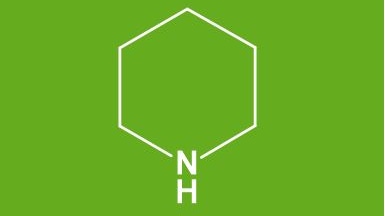
So the real advantage is not that piperidine is chiral, but that biocatalysis can provide stereochemical control in the synthesis of chiral piperidine derivatives.
Atom economy is only one part of green chemistry.
Chemical hydrogenation may require high-pressure hydrogen and metal catalysts, creating additional considerations around process safety, energy consumption and metal residues.
Fermentation, on the other hand, can convert renewable carbon sources into piperidine under much milder aqueous conditions.
Of course, fermentation is not automatically greener in every case. Downstream purification, water consumption and product concentration also matter.
The real question is:
Which route delivers the required purity, safety, stereochemical control and sustainability with the lowest overall process footprint?
That is where bio-based piperidine becomes interesting.
#Piperidine #Biocatalysis #Fermentation #GreenChemistry #Pharmaceuticals #SustainableChemistry




Check that your browser version is too low,
In order not to affect the normal use of the site, please directly upgrade your browser, or use other browsers such as: firefox, Google.
